




One thing that I see overlooked so much in sports nutrition conversations is that many athletes aren’t choosing to undereat carbohydrates because they are lazy, unmotivated, or “bad at nutrition.”
Many athletes don’t even realize they aren’t eating enough carbohydrates until they meet with a Registered Dietitian and learn the “whys” behind carbohydrate intake for overall health and performance.
Many athletes are high achievers, they think they’re “doing everything right.”
- They’re prioritizing protein
- Trying to eat “clean”
- Buying all the high-protein foods
- Avoiding processed foods
- Trying to have more “discipline”
But meanwhile they’re:
- Exhausted
- Craving sugar at night
- Struggling with recovery
- Plateauing in performance
- Dealing with brain fog
- Feeling inflamed
- Struggling with body composition
- Losing joy in their sport
- Wondering why they feel terrible despite “eating healthy”
A lot of athletes are unintentionally underfueling. One of the biggest missing pieces is carbohydrates, and timing of carbohydrates around exercise.
The Fitness Industry Became Infatuated With Protein
Listen, we all know that protein matters. It is crucial for muscle repair, recovery, satisfaction, maintaining lean body mass, and adaptation from training. But somewhere along the way, the fitness and diet industry turned protein into the main character while completely demonizing carbohydrates.
Now we have athletes eating protein cereal, protein chips, protein desserts, protein coffee, and protein bagels…but forgetting to eat rice, bread, pasta, potatoes and cereal.
The bottom line is that a large body of research does not support this fear around carbohydrates for athletes.
The International Olympic Committee and the American College of Sports Medicine both emphasize that carbohydrates are one of the body’s primary fuels for moderate to high intensity exercise — especially activities relying heavily on glycolytic energy systems like CrossFit, sprinting, interval training, and endurance sports. (Thomas et al., 2016; Burke et al., 2011). Your body actually prefers carbohydrates for performance. What is actually quite fascinating is when there are too few carbohydrates, the body goes through a process called gluconeogenesis, where the body breaks down amino acids from dietary protein and sometimes muscle tissue, and then converts them into glucose to maintain blood sugar levels. So what does that mean for athletes? Instead of using protein for recovery and muscle building, the body may start diverting it towards basic energy needs.
This is one reason chronically low-carb athletes may struggle with recovery, muscle retention, fatigue, elevated soreness, or stalled performance.
Protein can technically contribute to energy production, but it is metabolically expensive and not the body’s preferred strategy for high intensity performance.
What Happens to Dietary Fat?
When carbohydrate intake is low, the body also increases fat oxidation (burning fat for fuel). Fat can absolutely provide energy — especially during lower intensity exercise, rest, and longer steady-state aerobic activity. However, fat metabolism is much slower than carbohydrate metabolism. More importantly, fat cannot support high intensity exercise at the same rate carbohydrates can. This is because high intensity exercise relies heavily on glycolytic pathways that require glucose/glycogen.
So while the body CAN increase fat utilization, you will experience the following:
- A drop in performance intensity
- Slower recovery
- Feeling flat, sluggish, or unable to “push”
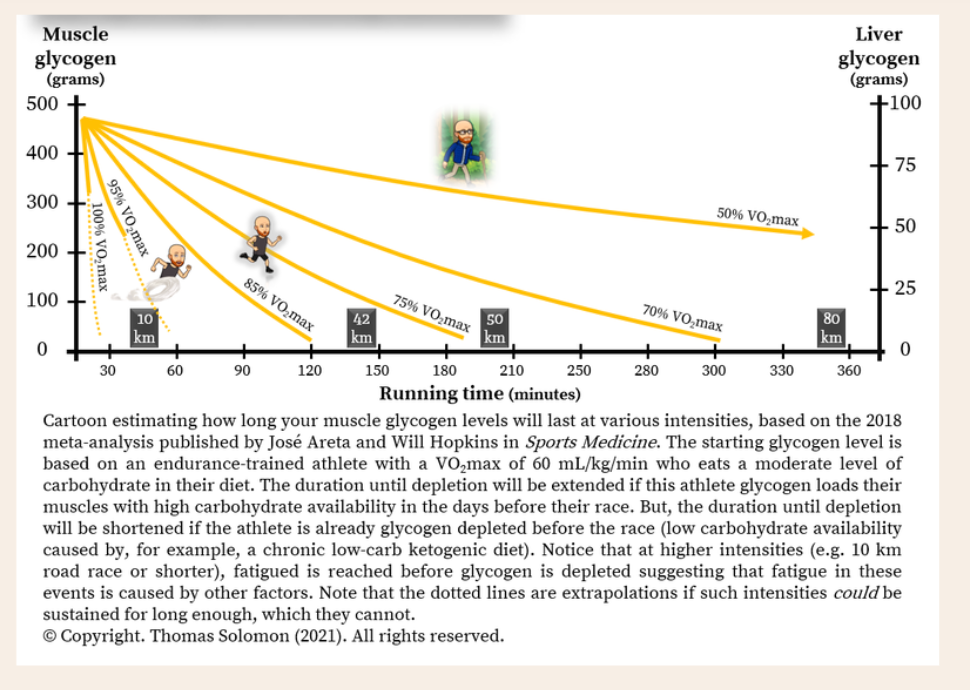
Research shows 70-80% of glycogen stores were depleted at the end of 90 min games, so nutrition prior to, during and after training/matches is a must!
What About Ketones?
If carbohydrate intake becomes extremely low, the liver can begin producing ketone bodies from fat. Ketones can provide an alternative fuel source for the brain, muscles, and other tissues. This is the metabolic state called ketosis.
However, ketosis is not necessarily optimal for everyone — especially athletes participating in high intensity and high endurance sports like Crossfit, sprinting, power lifting, team sports, interval training, etc. Research generally shows ketogenic diets may impair high intensity exercise performance because glycogen availability becomes limited. (Burke et al., 2017).
Carbohydrates Are Your Body’s Fuel Tank
Carbohydrates get stored in the muscles and liver as glycogen. Glycogen is basically your body’s stored fuel for training, and carbohydrates are the source that supports glycogen storage. The harder and longer you train, the more glycogen you use. (See image 1)
This is why athletes who are not eating enough carbs often describe:
- Crashing halfway through workouts
- Feeling weak during conditioning
- Struggling with endurance
- Feeling shaky
- Unusually high fatigue
- Feeling like their legs are “dead”
Research consistently shows that low glycogen availability can impair:
- Training intensity
- Endurance capacity
- Muscular output
- Recovery
- Cognitive performance
Meanwhile many athletes are trying to train like high-performing athletes while eating like sedentary wellness influencers online. That math does not work.

Most Athletes Don’t Actually Meet Sports Nutrition Recommendations
Honestly, most athletes are shocked when they learn how many carbohydrates sports nutrition guidelines actually recommend. Fueling for athletic performance looks drastically different than for a body aesthetic sport.
The American College of Sports Medicine generally recommends:
- 5–7 g/kg/day of carbohydrates for moderate training
- 6–10 g/kg/day for endurance or high-volume training athletes
For a 160-pound athlete (~73 kg), that could mean:
- 365–730 grams of carbohydrates per day depending on training demands.
And when I explain this to athletes, most think: “There is absolutely no way.”
As a dietitian, I walk them through their intake and they’re often barely hitting 150–200 grams while training intensely 5–6 days per week. That is a massive gap in carbohydrate intake which could be holding them back from supporting their body and reaching their potential. Research shows athletes, especially female athletes, frequently under-consume both total calories and carbohydrates relative to training demands (Logue et al., 2020).
Why Meeting Carbohydrate Needs Is Actually HARD
This is the part I think gets missed in a lot of nutrition conversations. A lot of athletes are not under-eating carbs because they’re lazy or “bad” at nutrition. Sometimes physiologically, it is genuinely difficult to eat enough to support training demands. This is especially true in high endurance sports like Hyrox, soccer, hockey, Crossfit or repeated high-intensity training.
High intensity exercise can actually suppress appetite. Blood flow shifts away from the gut during exercise. During high intensity exercise, blood flow gets redirected toward skeletal muscles, the heart, lungs, and skin for cooling. At the same time, blood flow to the GI tract decreases significantly. High intensity exercise has been shown to temporarily suppress appetite through changes in appetite-regulating hormones and stress responses (Schubert et al., 2014). Most people assume: “If you exercise more, you’ll naturally eat more.” But that’s not always true. During intense exercise stress hormones increase, body temperature rises, appetite hormones shift, and blood flow gets redirected away from the digestive system toward working muscles. The shift of blood flow away from the gut during exercise is one reason athletes commonly experience nausea, bloating, GI discomfort, loss of appetite, or stomach issues during and after training. During high intensity exercise, your body is essentially saying, “Digestion is not the priority right now.” Blood flow is being redirected toward your working muscles, heart, lungs, and skin to help support performance and regulate body temperature, which means the digestive system temporarily takes a back seat.
This tends to become even more noticeable during longer training sessions, workouts in the heat, periods of dehydration, or when athletes are training multiple times per day. So now we have athletes burning huge amounts of energy, rapidly depleting glycogen stores, suppressing hunger cues, and then struggling to tolerate enough food afterwards. That is a really difficult combination when you’re trying to adequately fuel performance and recovery.

“Clean Eating” Is Accidentally Causing Underfueling
I honestly think most athletes have good intentions. They’re trying to eat foods that make them feel good. They’re trying to improve health. They’re trying to improve body composition to help them feel their best in their sport. But sometimes “clean eating” accidentally turns into chronic underfueling.
I see athletes afraid to eat nourishing foods that are dense in carbohydrates like bagels, granola bars, pasta, tortillas, rice, and even fruit! Meanwhile they’re training 1–3 hours per day, lifting, running, doing double sessions, working physically demanding jobs, and trying to recover from all of it.
Underfueling Doesn’t Just Affect Performance
The effects of a low-carb diet go beyond workouts and athletic performance. When athletes consistently underfuel, especially carbohydrates, it can affect nearly every system in the body. Low energy availability has been associated with hormonal dysfunction, menstrual irregularities, impaired bone health, increased injury risk, fatigue, poor sleep, impaired immune function, mood disturbances, and reduced recovery capacity (Mountjoy et al., 2018).
Especially in women, chronic underfueling can contribute to Relative Energy Deficiency in Sport (RED-S). And RED-S affects far more than just menstrual cycle health. The International Olympic Committee recognizes impacts on metabolism, cardiovascular health, cognition, immune function, protein synthesis, and mental health as well (Mountjoy et al., 2018).
This is one reason I think these conversations matter so much. This is not just about aesthetics or body composition. This is whole body health.
One of the Biggest Signs? Intense Nighttime Cravings
This is something I work through with clients all the time. People often assume nighttime cravings mean they lack discipline, are addicted to sugar, or just need more “willpower.” But biologically, your body is incredibly smart.
If you spend the entire day underfueling — especially carbohydrates — your brain will often drive stronger cravings later in the day in an attempt to compensate for the energy deficit. Research has shown that caloric restriction and low carbohydrate availability can increase food preoccupation, cravings, and dysregulated eating behaviors (Polivy, 1996).
Your body is not trying to sabotage you. It is trying to protect you and keep you alive.
Ironically, Eating More Often Helps Body Composition
This is the part that surprises people the most. A lot of athletes are terrified that eating more carbohydrates will automatically cause weight gain, but properly fueling often helps body composition instead of hurting it.
When athletes start eating enough to support their training demands, training quality improves, recovery improves, muscle retention improves, stress levels often decrease, and cravings become much more manageable. Research supports adequate carbohydrate intake in helping maintain training quality and preserving lean body mass, especially during periods of high training demand (Burke et al., 2011).
You cannot build a strong, resilient body while constantly underfueling it.

So What Should Athletes Actually Focus On?
Honestly? Probably less restriction and more of the following:
- Consistency
- Nutrient-dense meals
- Adequate carbohydrates
- Hydration
- Recovery
- Realistic fueling habits
Not every meal needs to be perfect, but athletes often need MORE intentional fueling than they think. This is especially true because hunger cues are not always reliable when training intensely.
Sometimes sports nutrition means eating before you feel starving, adding carbs around workouts strategically, and sometimes using convenience foods because they are practical and digestible.
Examples:
- Proper meals before training
- Oats at breakfast
- Rice with meals
- Simple carbohydrates around workouts
- Sports drinks during long sessions
- Granola in yogurt
- Cereal after training
- Pretzels between practices
If you are an athlete, or honestly just a very active person, and you are noticing some of these common signs of underfueling, it may be worth taking a closer look at whether you are actually eating enough to support your activity level.
Some of the biggest signs I commonly see include:
- Constantly thinking about food
- Intense nighttime cravings
- Low energy throughout the day
- Feeling exhausted after workouts instead of energized
- Worsening recovery
- Decreased performance
- Brain fog
- Irritability
- Trouble sleeping or waking up in the middle of the night
- Feeling cold frequently
- Loss of menstrual cycle
- Recurring injuries
- Digestive changes
- Feeling like your body composition is not changing despite working incredibly hard
Many athletes normalize these symptoms because they are so common in fitness spaces.
People assume:
“I’m just tired because I train hard.”
“I just have a sweet tooth.”
“I need more discipline.”
“I probably just need to eat cleaner.”
But many times, the issue is not lack of discipline. The issue is lack of fuel or even timing of fuel around training.
I think one of the hardest parts is that underfueling does not always look dramatic. Sometimes it looks like:
- Skipping carbs at meals
- Eating “healthy” but not enough total food
- Relying on protein shakes and snacks instead of full meals
- Avoiding convenience foods that could actually help support intake
- Trying to out-train chronic low energy intake
A lot of athletes are functioning in a constant low-grade energy deficit without realizing it.
Because the body is incredibly adaptive, people can continue functioning like this for a long time before things really start to break down. But eventually the body starts giving signals that something is off — whether that is through recovery, hormones, mood, sleep, cravings, injuries, or performance.
This is also why I think sports nutrition needs to move away from the idea that eating less is always better. For many athletes, learning how to eat enough consistently is actually the bigger challenge.
Because at the end of the day, your body cannot perform, recover, adapt, and stay healthy without adequate energy availability. Training is the stimulus, but nutrition is what allows your body to actually adapt to that stimulus.
At No Diet Dietitian, our sports dietitians help athletes build realistic fueling strategies that support performance, recovery, hormones, and long-term health — without extreme restriction or obsessing over numbers. You can book a free consultation through our website to learn more.
Written by our Registered Dietitian and board certified specialist, Ashleigh Angle.
Citations:
Burke, L. M., Hawley, J. A., Wong, S. H., & Jeukendrup, A. E. (2011). Carbohydrates for training and competition. Journal of Sports Sciences, 29(sup1), S17–S27.
Logue, D. M., Madigan, S. M., Delahunt, E., Heinen, M., Mc Donnell, S. J., & Corish, C. A. (2020). Low energy availability in athletes: A review of prevalence, dietary patterns, physiological health, and sports performance. Sports Medicine, 50(1), 73–96.
Mountjoy, M., Sundgot-Borgen, J., Burke, L., Ackerman, K. E., Blauwet, C., Constantini, N., Lebrun, C., Lundy, B., Melin, A., Meyer, N., Sherman, R., Tenforde, A. S., Torstveit, M. K., & Budgett, R. (2018). IOC consensus statement on Relative Energy Deficiency in Sport (RED-S): 2018 update. British Journal of Sports Medicine, 52(11), 687–697. https://doi.org/10.1136/bjsports-2018-099193
Polivy, J. (1996). Psychological consequences of food restriction. Journal of the American Dietetic Association, 96(6), 589–592. https://doi.org/10.1016/S0002-8223(96)00140-2
Schubert, M. M., Sabapathy, S., Leveritt, M., & Desbrow, B. (2014). Acute exercise and hormones related to appetite regulation: A meta-analysis. Sports Medicine, 44(3), 387–403. https://doi.org/10.1007/s40279-013-0120-3
ter Steege, R. W., & Kolkman, J. J. (2012). Review article: The pathophysiology and management of gastrointestinal symptoms during physical exercise. Alimentary Pharmacology & Therapeutics, 35(5), 516–528. https://doi.org/10.1111/j.1365-2036.2011.04958.x
Thomas, D. T., Erdman, K. A., & Burke, L. M. (2016). Position of the Academy of Nutrition and Dietetics, Dietitians of Canada, and the American College of Sports Medicine: Nutrition and athletic performance. Journal of the Academy of Nutrition and Dietetics, 116(3), 501–528. https://doi.org/10.1016/j.jand.2015.12.006


+ show Comments
- Hide Comments
add a comment