




Why Fueling Matters More Than I Realized
Around four years ago, when I first started CrossFit, I sought out a dietitian because I was struggling with hormonal challenges (fatigue, injuries, poor recovery, menstrual dysfunction, not gaining muscle mass, and gym plateaus) that I didn’t know were tied to nutrition. I was training hard, staying disciplined, and doing everything “right” — but my body wasn’t responding the way I thought it should. I also was in my second year of school studying nutrition and started to wonder if maybe my fueling wasn’t supporting my exercise.
What shocked me was that in all the medical conversations I had with primary care doctors and OBGYNs, no one ever suggested nutrition could be the missing piece.
Once I began working with a dietitian (actually one from No Diet Dietitian 4 years ago!) I learned how much underfueling was impacting me. It wasn’t just about food — it was about energy balance, recovery, and allowing my body to perform and heal. Over time, as I fueled more intentionally and consistently, the changes were life-changing. My energy improved, my performance skyrocketed, my mood stabilized, and my hormones finally came back into balance.
Now, as a registered dietitian myself, I see athletes struggling with the very same challenges. Many are underfueling without even knowing it, and worse — they aren’t sure where to turn for answers. That’s why I’m passionate about educating athletes on Relative Energy Deficiency in Sport (RED-S).
My own experience opened my eyes to just how overlooked nutrition can be in sports. Too often, athletes are told to train harder or recover smarter — but rarely are they asked whether they’re fueling enough to keep up with those demands. This gap in awareness is exactly why RED-S continues to fly under the radar, despite its serious impact on health and performance.
What Is Relative Energy Deficiency in Sport or Commonly (RED-S)?
First defined by the International Olympic Committee in 2014, Relative Energy Deficiency in Sport (RED-S) describes the health and performance consequences of low energy availability — when the energy an athlete eats isn’t enough to cover both daily living and training demands (Mountjoy et al., 2018).
Unlike the older concept of the female athlete triad (which focused only on menstrual function, bone health, and energy availability), RED-S was designed to reflect a broader reality. It applies to all athletes — male and female — and impacts multiple body systems (De Souza et al., 2014).
Research has shown RED-S can influence hormones, bone strength, immunity, metabolism, and psychological well-being (Ackerman et al., 2019). And while the science can sound complicated, the reality is simple: fueling enough is non-negotiable for performance and health.
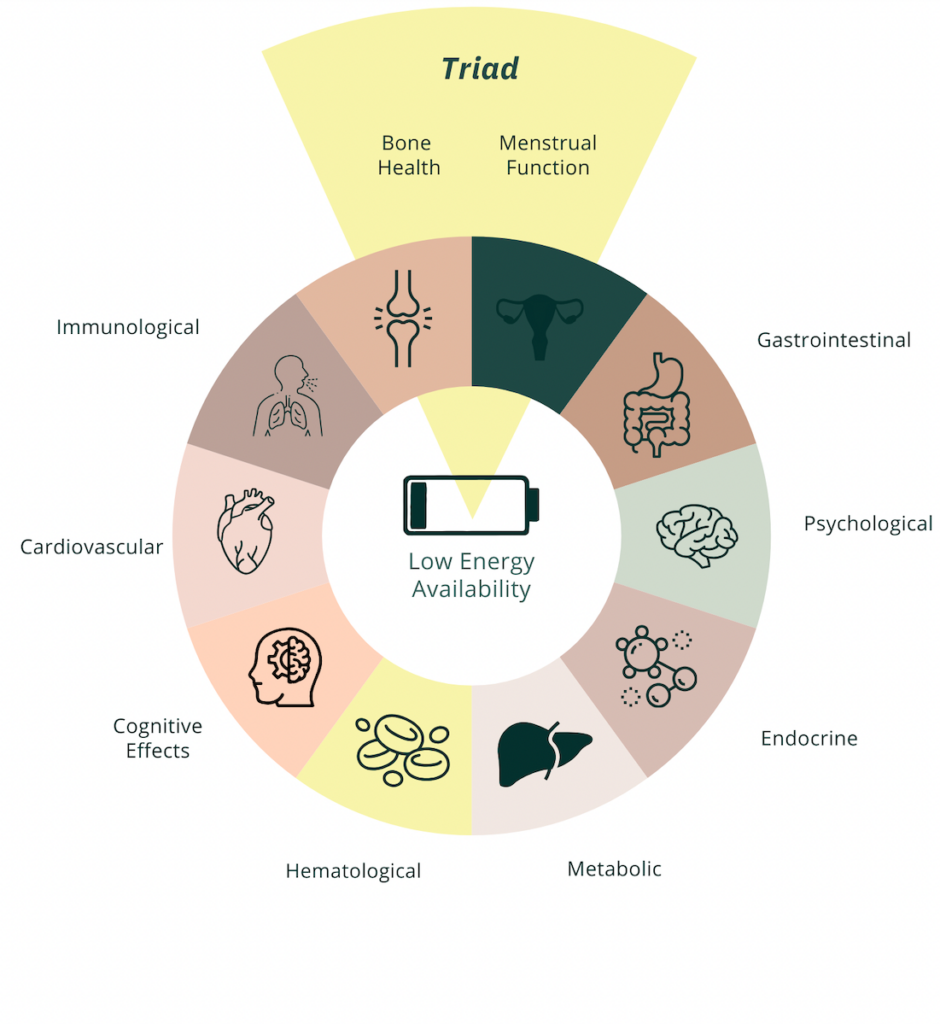
Figure 1. Health consequences of Relative Energy Deficiency in Sport (RED-S). Low energy availability affects nearly every system in the body, from hormones and metabolism to bone health and immunity (Mountjoy et al., 2014/2018).
Signs You May Be at Risk
The tricky part about RED-S is that the signs often appear gradually — and can be mistaken for overtraining, stress, or “just being busy.” Even more concerning, many athletes normalize these symptoms.
Think about how often you’ve heard (or said):
- “I’m just tired because I’m training hard.”
- “Everyone’s sore — that’s normal.”
- “Recovery isn’t supposed to feel easy.”
Feeling constantly fatigued, sore, or “never fully recovered” is often brushed off as part of the grind or even worn as a badge of honor in sports culture. But when these warning signs are accepted as “normal,” athletes risk ignoring the early indicators of RED-S until bigger health problems emerge (Logue et al., 2018).
Here are some red flags to watch for:
- Persistent fatigue or decreased performance despite training consistently
- Frequent injuries — especially stress fractures or bone pain
- Menstrual irregularities in females (missed or irregular periods)
- Low testosterone or reduced libido in males (Fredericson et al., 2021)
- Weakened immune system, leading to frequent illness (Hagmar et al., 2008)
- Mood changes such as irritability, anxiety, or depression (Chatmon, 2020)
- Difficulty recovering between sessions or competitions
When these patterns are accepted as “normal,” athletes risk ignoring the early indicators of RED-S. Left untreated, the consequences extend far beyond fatigue, affecting bone health, hormones, and long-term well-being (Papageorgiou et al., 2018).
A Common Question: Is It Overtraining or Underfueling?
One of the most frequent questions I hear from athletes is: “How do I know if I’m overtrained or if I’m just under-fueled?”
The truth is, both can present very similarly. Both overtraining and RED-S can cause fatigue, poor recovery, mood changes, and performance decline. But here’s the key distinction:
- Overtraining usually comes from excessive training load without enough rest.
- RED-S comes from inadequate fueling (low energy availability) relative to training and daily life demands.
Some experts even argue that what athletes often call “overtraining” is actually underfueling in disguise. If your body doesn’t have enough energy to support recovery, training stress builds up — leading to the same symptoms associated with overtraining.
And where do overuse injuries fit in? They can be a sign of both. RED-S weakens bone health and tissue recovery, which raises the risk of stress fractures and repetitive strain injuries. At the same time, high training volume without adequate rest can also contribute to these injuries.
That’s why it’s so important to look at the full picture: training load + nutrition + recovery. If you’re ticking all the boxes for sleep and recovery but still feeling depleted, RED-S may be at play.
| Overtraining | RED-S |
| Caused by too much training without enough rest | Caused by not eating enough to match training + life demands |
| Symptoms improve with reduced training load | Symptoms improve with increased fueling |
| Not always tied to nutrition | Always tied to low energy availability |

Why does Underfueling Happen?
Athletes underfuel for many reasons — sometimes intentionally, sometimes without realizing it:
- Increased training load without adjusting nutrition
- Misinformation about what or how much to eat
- Cultural pressures around body image in sport
- Busy schedules that make fueling feel inconvenient
- Disordered eating or overly restrictive diets
And underfueling doesn’t always look the same. Endurance athletes may skip fueling during long training sessions because they’re worried about stomach upset, while team sport athletes may underestimate how much energy their stop-and-go movements actually require. In CrossFit and other high-intensity sports, it’s common to see athletes train multiple times a day without adjusting nutrition — leading to cumulative energy deficits that only show up weeks later as injuries, illness, or hormonal disruption. In other words, underfueling often hides in plain sight until the body simply can’t keep up anymore.
Surveys show less than half of coaches, trainers, and medical professionals can identify RED-S, meaning underfueling often goes unnoticed until health consequences appear (Curry et al., 2015; Brown et al., 2014).
The Consequences Beyond Performance
RED-S isn’t just about having “low energy.” Its ripple effects touch nearly every system in the body:
- Hormonal disruption → missed periods, low testosterone, impaired reproductive health (Cano Sokoloff et al., 2016)
- Bone health decline → stress fractures, higher risk of osteoporosis (Ackerman et al., 2011)
- Weakened immunity → more frequent illness and slower recovery (Hagmar et al., 2008)
- Psychological strain → increased anxiety, low mood, poor focus (Chatmon, 2020)
- Metabolic changes → slowed resting metabolic rate and reduced muscle mass (Woods et al., 2017)
When energy is chronically low, the body goes into conservation mode — prioritizing survival over performance. This can make symptoms widespread, confusing, and hard to trace back to nutrition. To make things harder, there isn’t one single diagnostic test for RED-S, so it often takes a team of health professionals to identify it.

What Works: Prevention and Treatment
The good news? RED-S is preventable and treatable, especially when caught early. The most effective approaches combine big-picture strategies with day-to-day fueling habits:
- Fuel adequately for training and life. Energy intake must not only replace what training burns but also support daily living. A simple starting point is aiming for 3 balanced meals plus 2–3 snacks each day. Skipping meals makes it nearly impossible to meet your needs.
- Prioritize carbohydrate availability. Carbs are the body’s primary training fuel, and adequate intake helps protect immunity and performance (Logue et al., 2018).
- Don’t skip recovery meals. Eating within 30–60 minutes post-training supports muscle repair and glycogen restoration.
- Snack smart. Keep portable options (yogurt, trail mix, fruit + nut butter, protein bars) on hand to avoid missed fueling opportunities.
- Work with a sports dietitian. RDNs trained in sports nutrition can assess energy availability, tailor fueling strategies, and guide recovery (Thomas et al., 2016).
- Monitor key health markers. Hormones, bone density, and resting metabolic rate provide important feedback on whether you’re fueling enough.
- Adopt a weight-inclusive mindset. Performance is defined by strength, resilience, and recovery — not by the number on a scale (Tylka et al., 2014).
- Address the mental side. Stress, perfectionism, or restrictive eating patterns often drive underfueling and need to be part of the conversation.
- Listen to your body. Signals like persistent fatigue, mood changes, or dizziness may be telling you your energy balance is off.
How do we make this practical?
A busy athlete training at 6 a.m. might benefit from a pre-workout snack like a banana with peanut butter, followed by a balanced breakfast after training(eggs, sausage, whole grain toast, fruit). Lunch could be a wrap with chicken, veggies, and hummus, paired with fruit + pretzels. An afternoon snack like Greek yogurt with granola + antioxidant blueberries supports recovery, while dinner might include salmon, rice, and roasted vegetables. A nighttime snack such as a smoothie or protein pudding rounds out the day. These simple choices can make it much easier to avoid slipping into low energy availability.
Why This Matters for Every Athlete
Relative Energy Deficiency in Sport is more than a performance issue — it’s a health issue. Athletes who underfuel put their bones, hormones, immunity, and mental well-being at risk. Over time, this can mean more stress fractures, irregular cycles or low testosterone, suppressed immunity, and even changes in mood and motivation. These aren’t just short-term inconveniences; they can have lasting consequences that follow athletes well beyond their competitive years.
For female athletes, this might show up as menstrual irregularities that affect both performance and long-term reproductive health. For male athletes, low energy availability can lower testosterone, reduce muscle mass, and blunt training adaptations. For both, the combination of fatigue, poor recovery, and frequent illness can feel like constantly “hitting a wall” — even when training is dialed in.
But awareness changes outcomes. Once athletes understand RED-S, they can see that constant tiredness, nagging injuries, or mood swings aren’t just “normal parts of the grind” — they’re signs of underfueling. Early intervention with evidence-based nutrition strategies can restore energy balance, protect long-term health, and allow athletes to thrive in both sport and life.
And perhaps most importantly, addressing RED-S helps shift the culture of sport. It sends the message that fueling is not a sign of weakness or indulgence — it’s a cornerstone of strength, resilience, and performance. Recognizing and treating RED-S is not just about preventing problems, it’s about unlocking the full potential of athletes, both on the playing field and in everyday life.
Final Thoughts
RED-S often hides behind the surface symptoms of fatigue, mood changes, or nagging injuries. But it doesn’t have to define your athletic journey. By learning the signs, fueling intentionally, and seeking support, you can protect both performance and long-term health.
If you’re wondering whether underfueling may be holding you back, or if you’re experiencing signs of RED-S, now is the time to act.
👉 Book a free consultation with No Diet Dietitian and take the first step toward fueling smarter, performing stronger, and protecting your future health. Most insurances cover services, no referral needed, and no copay.
Written by our Registered Dietitian and board certified specialist, Ashleigh Angle.
References:
- Ackerman, K. E., Holtzman, B., Cooper, K. M., et al. (2019). Low energy availability surrogates correlate with health and performance consequences of Relative Energy Deficiency in Sport. British Journal of Sports Medicine, 53(10), 628–633. https://doi.org/10.1136/bjsports-2017-098958
- Ackerman, K. E., Nazem, T., Chapko, D., et al. (2011). Bone microarchitecture is impaired in adolescent amenorrheic athletes compared with eumenorrheic athletes and nonathletic controls. Journal of Clinical Endocrinology & Metabolism, 96(10), 3123–3133. https://doi.org/10.1210/jc.2011-1614
- Brown, K. N., Wengreen, H. J., & Beals, K. A. (2014). Knowledge of the Female Athlete Triad, and prevalence of Triad risk factors among female high school athletes and their coaches. Journal of Pediatric and Adolescent Gynecology, 27(5), 278–282. https://doi.org/10.1016/j.jpag.2013.11.014
- Cano Sokoloff, N., Misra, M., & Ackerman, K. E. (2016). Exercise, training, and the hypothalamic-pituitary-gonadal axis in men and women. Frontiers in Hormone Research, 47, 27–43. https://doi.org/10.1159/000445154
- Chatmon, B. N. (2020). Males and mental health stigma. American Journal of Men’s Health, 14(4), 1557988320949322. https://doi.org/10.1177/1557988320949322
- Curry, E. J., Logan, C., Ackerman, K., McInnis, K. C., & Matzkin, E. G. (2015). Female Athlete Triad awareness among multispecialty physicians. Sports Medicine – Open, 1(1), 38. https://doi.org/10.1186/s40798-015-0037-5
- De Souza, M. J., Nattiv, A., Joy, E., et al. (2014). Female Athlete Triad Coalition Consensus Statement on Treatment and Return to Play. British Journal of Sports Medicine, 48(4), 289–289. https://doi.org/10.1136/bjsports-2013-093218
- Fredericson, M., Kussman, A., Misra, M., et al. (2021). The Male Athlete Triad—Consensus statement Part II: Diagnosis, treatment, and return-to-play. Clinical Journal of Sport Medicine, 31(4), 349–366. https://doi.org/10.1097/JSM.0000000000000948
- Hagmar, M., Hirschberg, A. L., Berglund, L., & Berglund, B. (2008). Weight-control strategies in Olympic athletes striving for leanness. Clinical Journal of Sport Medicine, 18(1), 5–9. https://doi.org/10.1097/JSM.0b013e31804c77bd
- Logue, D., Madigan, S. M., Delahunt, E., Heinen, M., Mc Donnell, S. J., & Corish, C. A. (2018). Low energy availability in athletes: A review of prevalence, dietary patterns, physiological health, and sports performance. Sports Medicine, 48(1), 73–96. https://doi.org/10.1007/s40279-017-0790-3
- Mountjoy, M., Sundgot-Borgen, J., Burke, L. M., et al. (2018). IOC consensus statement on Relative Energy Deficiency in Sport (RED-S): 2018 update. British Journal of Sports Medicine, 52(11), 687–697. https://doi.org/10.1136/bjsports-2018-099193
- Mountjoy, M., Ackerman, K. E., Bailey, D. M., et al. (2023). International Olympic Committee consensus statement on RED-S. British Journal of Sports Medicine, 57(17), 1073–1098. https://doi.org/10.1136/bjsports-2023-106994
- Papageorgiou, M., Dolan, E., Elliott-Sale, K. J., & Sale, C. (2018). Reduced energy availability: Implications for bone health. European Journal of Nutrition, 57(3), 847–859. https://doi.org/10.1007/s00394-017-1498-8
- Thomas, D. T., Erdman, K. A., & Burke, L. M. (2016). Position of the Academy of Nutrition and Dietetics, Dietitians of Canada, and the American College of Sports Medicine: Nutrition and athletic performance. Journal of the Academy of Nutrition and Dietetics, 116(3), 501–528. https://doi.org/10.1016/j.jand.2015.12.006
- Tylka, T. L., Annunziato, R. A., Burgard, D., et al. (2014). The weight-inclusive versus weight-normative approach to health: Evaluating the evidence for prioritizing well-being over weight loss. Journal of Obesity, 2014, 983495. https://doi.org/10.1155/2014/983495
- Woods, A. L., Garvican-Lewis, L. A., Lundy, B., Rice, A. J., & Thompson, K. G. (2017). New approaches to determine fatigue in elite athletes during intensified training. PLOS ONE, 12(3), e0173807. https://doi.org/10.1371/journal.pone.0173807


+ show Comments
- Hide Comments
add a comment