


In Part 1, we explored how intuitive eating helps you unlearn diet culture and rediscover food satisfaction. Now it’s time for the other half of the framework: the principles that help you deepen trust with your body.
These are less about saying no to diet culture and more about saying yes to yourself: to fullness, to coping skills, to body respect, to joyful movement, and to gentle nutrition.
Principle 6: Feel Your Fullness
Fullness cues can be subtle – especially if you’ve learned to override them with external rules like “clean your plate” or “hit your macros.”
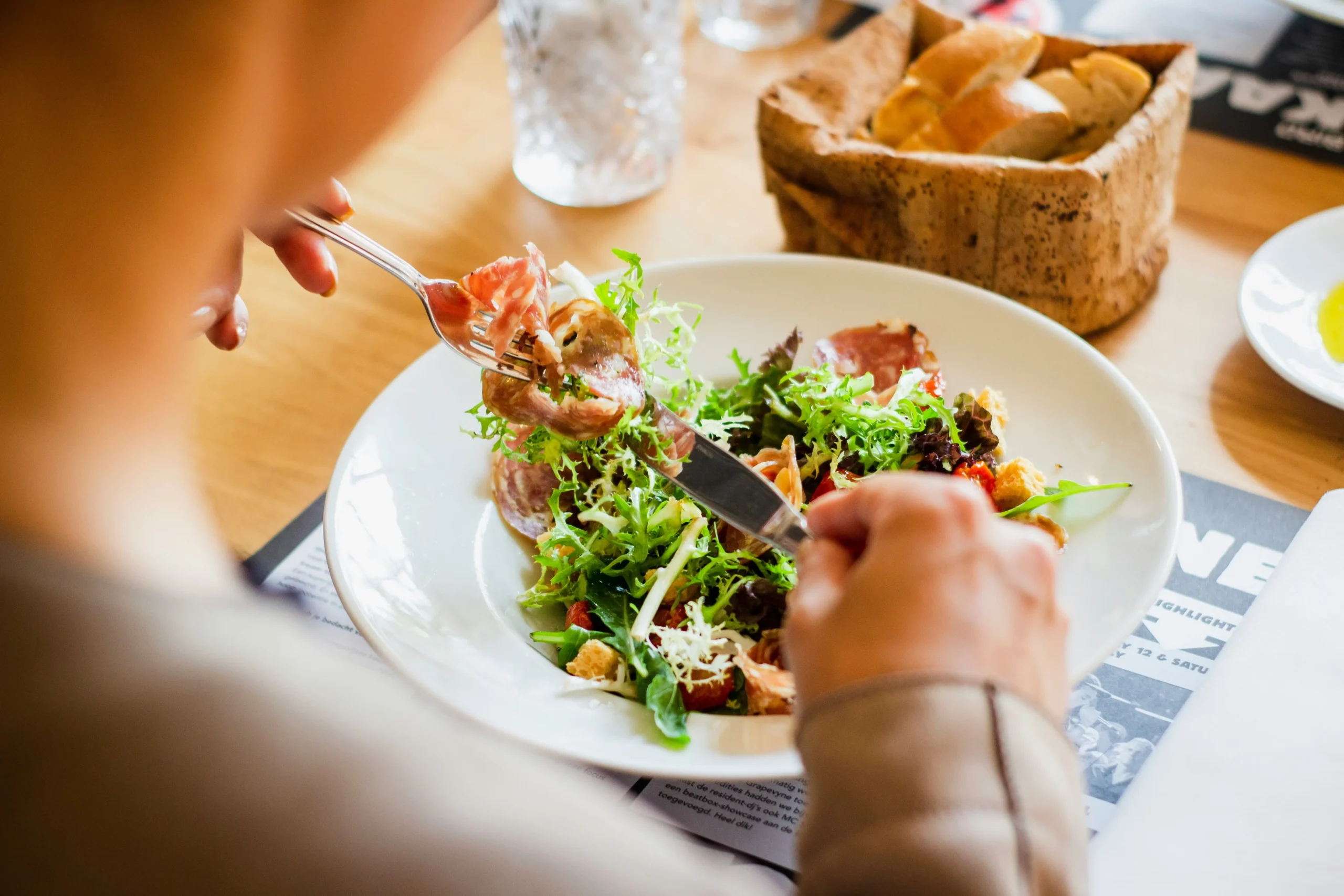
Feeling your fullness means pausing to notice how food feels as you eat. Are you still hungry? Are you comfortably satisfied? Has the pleasure of eating started to fade?
This isn’t about finding the “perfect” stopping point – it’s about reconnecting with the signals your body has been sending all along. Over time, you learn that you can trust those signals to guide you, just as much as hunger does.
Example:
Jordan grew up in the “clean plate club.” They were used to eating until overstuffed. With practice, Jordan started pausing mid-meal, noticing when they felt comfortably full, and saving leftovers instead of forcing themselves to finish.
Try this:
Halfway through your next meal, put your fork down. Take a breath. Ask, “Where’s my fullness right now?” You don’t need to stop eating, just notice.

Principle 7: Cope with Your Emotions with Kindness
Food can soothe. That’s not inherently a problem – it only becomes one if it’s your only coping mechanism.
This principle is about widening your emotional toolbox. Stress, boredom, loneliness, anxiety – these are all part of being human. And while food can bring comfort, other tools (movement, connection, rest, creativity) often bring deeper relief.
Crucially, this principle isn’t about shame. If you eat when stressed, that doesn’t make you “bad.” It makes you human. The practice is to add more coping options, not to eliminate food as one.
Example:
Maria used to eat cookies after stressful workdays, then shame-spiral. Through intuitive eating, she learned that sometimes cookies were fine – but she also added journaling and evening walks to her routine. Now she has options.
Try this:
Make a list of 5 non-food coping strategies you could turn to when stressed, sad, or bored. Keep it handy.
Principle 8: Respect Your Body
Respect isn’t about loving every inch of your body – it’s about treating your body with dignity here and now.
Diet culture often says: “Take care of yourself once you lose the weight.” Body respect flips that script: “I deserve care, comfort, and respect today.”
That might mean buying clothes that fit instead of squeezing into old ones. It might mean getting enough rest, or speaking kindly to yourself. When you respect your body, you make choices from care – not punishment.
Example:
Anthony squeezed into too-small jeans, hoping they’d motivate weight loss. He felt uncomfortable and self-conscious all day. When he finally bought clothes that fit his current body, his confidence improved overnight.
Try this:
Identify one small act of body respect today – whether it’s stretching, going to bed earlier, or finally buying shoes that don’t hurt.

Principle 9: Movement – Feel the Difference
For many people, exercise has been tangled up with shame and punishment: “burn it off,” “earn your food,” “no days off.” No wonder so many dread it.
Intuitive eating reframes movement as something that enhances your life. Movement can reduce stress, improve mood, and increase energy. And when you choose activities you actually enjoy, consistency comes naturally – not from discipline, but from pleasure.
Example:
Maya dreaded the gym but forced herself into HIIT classes anyway. When she tried dance classes instead, she realized movement could actually be fun. Now she moves regularly – because she wants to, not because she “should.”
Try this:
Think about movement you enjoyed as a child – swimming, biking, rollerblading, dancing. Try bringing one of those back into your routine.
Principle 10: Honor Your Health with Gentle Nutrition
Gentle nutrition comes last for a reason. If you start here, it can feel like another diet. But once you’ve unlearned restriction and rebuilt trust, nutrition becomes another way to care for yourself – without rigidity.
Gentle nutrition is about patterns, not perfection. It’s about asking: What would make me feel nourished and energized today? Sometimes that’s a salad. Sometimes it’s pizza. Sometimes it’s both.
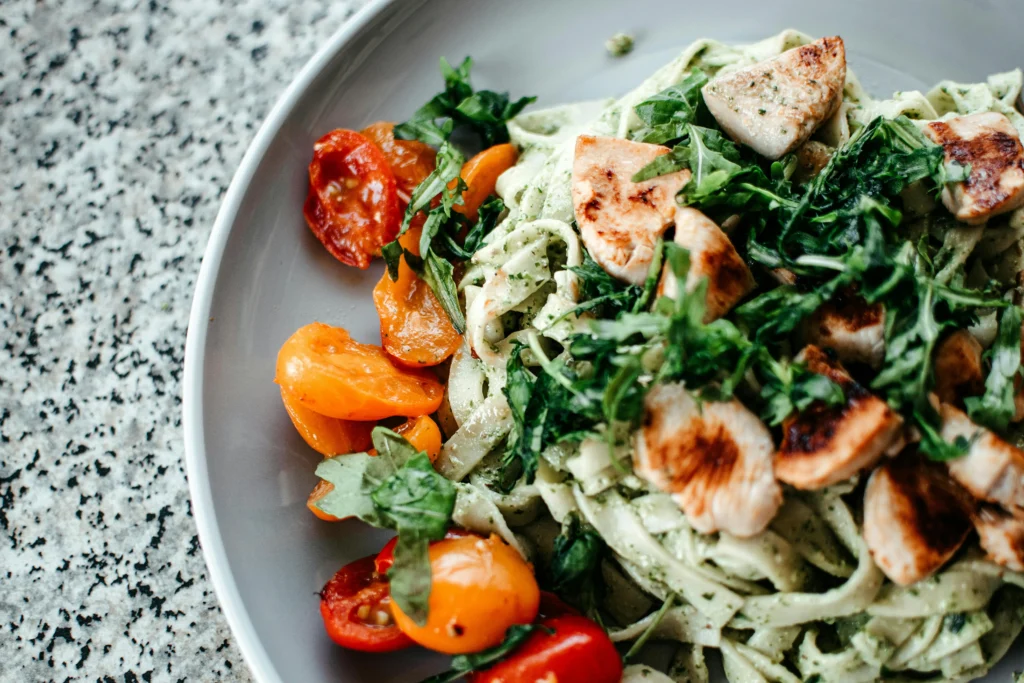
Example: Chris loved pasta but felt guilty eating it. Over time, he began adding vegetables and chicken to his pasta dishes – not because he had to, but because it made him feel energized. The difference was choice, not rule-following.
Try this: Ask yourself: What’s one small way I could add nourishment to my meals this week – without taking away enjoyment?
Pulling It All Together
The final five principles are intuitive eating are about rebuilding trust:
- Listening to fullness cues
- Expanding coping skills
- Respecting your body
- Moving joyfully
- Using nutrition gently, not rigidly
When combined with the first five, they create a holistic approach to food and body.
Research shows that intuitive eating is associated with 2-4:
- Lower rates of disordered eating
- Improved body image
- More consistent movement
- Better psychological well-being
It’s not about giving up – it’s about choosing care over control.
So, Is It “Eat Whatever You Want”?
At first glance, intuitive eating might sound like chaos: eat cake for breakfast, chips for dinner, and call it freedom. But in practice, when all foods are allowed and your body is trusted, balance naturally emerges.
Think about it: If you truly had permission to eat pizza for every meal, how long would that be satisfying? A day? Two? Eventually, your body would crave variety – fiber, protein, fresh flavors. Intuitive eating trusts that your body wants balance once deprivation and guilt are removed.
Final Thoughts
So no, intuitive eating isn’t “just eat whatever you want.”
It’s:
- Eat when you’re hungry, stop when you’re satisfied.
- Enjoy foods without guilt or obsession.
- Care for your emotions with compassion.
- Move in ways that feel joyful.
- Nourish your body with balance, not rigidity.
That’s not indulgence. That’s freedom.
Resources
Learn more about Intuitive Eating from the creators of the framework at intuitiveeating.org. If you’d like one-on-one individualized support with your intuitive eating journey, reach out to No Diet Dietitian today.
Written by our Registered Dietitian and board certified specialist, Maca Noorman.
References:
- Jacquet P, Schutz Y, Montani JP, Dulloo A. How dieting might make some fatter: modeling weight cycling toward obesity from a perspective of body composition autoregulation. Int J Obes (Lond). 2020;44(6):1243-1253. doi:10.1038/s41366-020-0547-1
- Linardon J, Mitchell S. Rigid dietary control, flexible dietary control, and intuitive eating: Evidence for their differential relationship to disordered eating and body image concerns. Eat Behav. 2017;26:16-22. doi:10.1016/j.eatbeh.2017.01.008
- Linardon J, Tylka TL, Fuller-Tyszkiewicz M. Intuitive eating and its psychological correlates: A meta-analysis. Int J Eat Disord. 2021;54(7):1073-1098. doi:10.1002/eat.23509
- Green HL, Garcia LI. Intuitive eating and its association with psychological and physical health indicators among rural U.S. adults. J Health Psychol. Published online May 23, 2025. doi:10.1177/13591053251336605


+ show Comments
- Hide Comments
add a comment