




Introduction: A Show Built on Spectacle
The Netflix documentary Fit for TV takes viewers behind the scenes of The Biggest Loser, a once-popular reality show built around dramatic weight loss transformations. From the opening scene of a woman in a bikini declaring, “I’m about as big as a cow” during her audition tape, it’s clear this show was not about health. It was about spectacle.
As a dietitian, I watched with disbelief, sadness, and uncomfortable recognition. This film wanted viewers to feel inspired by extreme “success stories,” but what I saw was the collision of entertainment, diet culture, and weight stigma.
Body Image and Stigma
One of the clearest themes in Fit for TV is how contestants’ bodies were treated as entertainment. Weight wasn’t just the storyline; it was the punchline.
Public weigh-ins as humiliation
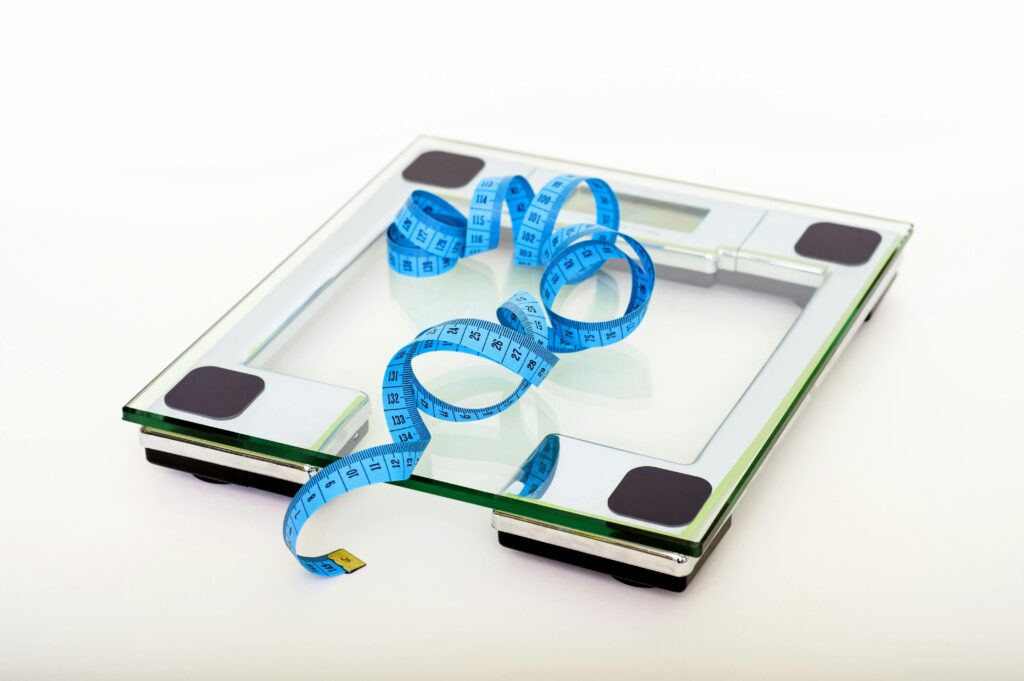
Contestants were forced to strip to their underwear, step on a giant scale, and have their weights read aloud in front of a live audience. The expectation was double-digit losses each week. When someone “only” lost four pounds, the crowd sighed audibly. Anti-stigma activist Aubrey Gordon reflected, “nothing you do in your life will be celebrated as much as getting thin.” These weigh-ins reinforced the idea that weight loss is the ultimate achievement, regardless of cost.
Trainers weaponizing shame
Trainers shouted things like, “we want them to puke” or “I’m going to break your legs and beat you with them, now get up.” Joelle Gwynn (Season 7) recalled injuring her back only to be told, “just walk it off, you’re not used to doing anything…don’t trust your body.” In another scene, she was berated for failing to complete 30 seconds on a treadmill. Cameras zoomed in on contestants collapsing, falling off equipment, and trembling under exhaustion. Gwynn summarized the atmosphere bluntly, “people like making fun of fat people.”
Casting and contracts reinforcing stigma
Danny Cahill (Season 8 winner) said he had to submit multiple audition tapes mocking his weight and eating habits just to get noticed. Producers even told another potential contestant to gain more weight in order to qualify. Contestants signed contracts that explicitly stated they could die during the process and the show would bear no responsibility. They weren’t permitted legal review and were threatened with replacement if they hesitated.
Temptation challenges based on stereotypes
Contestants were placed in rooms filled with high-calorie foods and told that whoever ate the most in 5 minutes could win a family visit. Whether or not they ate, they still had to weigh in at the end of the week. Aubrey Gordon critiqued the underlying message, “the idea is that fat people cannot be trusted around food.”
Dangerous challenges framed as entertainment
On the very first day of Season 8, contestants were bussed to a beach and told to race a mile to “earn” their spot on the show. For people unaccustomed to intense activity and without proper medical screening, this was inherently unsafe. One contestant collapsed at the finish line and developed rhabdomyolysis, a life-threatening condition where muscle tissue breaks down and can lead to kidney failure. However, no doctor was present, and the cameras kept rolling.
These weren’t just uncomfortable TV moments. They were structured forms of humiliation designed for ratings. Research confirms that exposure to weight-stigmatizing content increases body dissatisfaction and internalized weight bias, especially in adolescents and young adults (Pearl, 2020; Schvey et al., 2021; Bidstrup et al., 2022). Instead of promoting health, the show normalized shame as a motivator, something science shows only backfires.

Malnutrition and the “Quick Fix” Mentality
The documentary revealed just how extreme and unsafe the practices were:
- Contestants were pushed to burn 6,000 calories per day in the very first week.
- Some ate as little as 800 calories while exercising for 5-8 hours a day.
- Ryan Benson (Season 1 winner) admitted to following the “master cleanse” for 10 days before the finale and final weigh-in, becoming so dehydrated there was blood in his urine. Producers and trainers celebrated it with one of the trainers, Jillian Michaels, saying, “Ryan, you just made me a millionaire.”
- Caffeine pills were also reportedly provided by trainers to give contestants a “competitive edge” and boost weight loss. Despite these being banned by the show’s medical staff, trainers faced no real consequences.
This wasn’t discipline. It was clinical malnutrition. Danny Cahill (Season 8 winner) lost 239 pounds (56% of his body weight) in just 6 months. For context, losing more than 10% in 6 months is already considered severe. That level of loss is tied to impaired immunity, poor wound healing, muscle wasting, and higher disease and mortality risk.
We’ve known the dangers of rapid weight loss for decades. The Minnesota Starvation Experiment, later analyzed by David M. Garner, studied healthy men who lost about 25% of their body weight over 6 months following a semi-starvation diet (about 50% of their usual calorie intake). Even at that slower rate compared to The Biggest Loser, the men developed depression, anxiety, food obsession, binge eating, fatigue, slowed metabolism, cold intolerance, digestive problems, and cognitive dysfunction. Many symptoms persisted long after refeeding. Now imagine doubling the rate of weight loss with cameras cheering you on.
Rapid weight loss doesn’t just burn body fat:
- Cardiac muscle shrinks, lowering stroke volume and heart output.
- Bones weaken, fracture risk rises 200-300% within 1 year of undernutrition.
- Hormones plummet, disrupting reproductive and thyroid function.
- Liver and kidney function decline.
- Digestion slows, causing constipation and gastroparesis.
- Vitals drop: low blood pressure, slowed heart rate, hypoglycemia, cold extremities.
- Skeletal muscle is broken down for fuel.
Here’s the connection: these same red flags are also what we see clinically in eating disorders. In fact, anorexia nervosa is not defined by a person being “underweight” but by inadequate intake and weight loss relative to their baseline. Even a 5% loss can be significant when paired with symptoms like dizziness, abnormal vitals, or hypoglycemia. And while labs are often normal in early stages, anemia, low white blood cells, or liver enzyme changes may appear in more severe cases.
Eating Disorders: When “Entertainment” Becomes Illness
When starvation-level behaviors are normalized on national TV, it’s no surprise that they tip into disordered eating. Several contestants later reported being diagnosed with eating disorders. Suzanne Mendonca (Season 2) said her time on the show pushed her into a severe diagnosis and called her participation the “biggest mistake” of her life.
Common presentations of eating disorders include:
- AN (anorexia nervosa): Symptoms include food preoccupation, anxiety, slowed digestion, cold extremities, hypoglycemia, and low sex hormones.
- BN (bulimia nervosa): Cycles of binging and purging.
- BED (binge eating disorder): Large, uncontrolled eating episodes, often exacerbated after periods of restriction.
This fits the bigger picture: 35% of “normal dieters” eventually progress into disordered eating. Eating disorders carry one of the highest mortality rates of any mental illness, even higher than diabetes or cancer. In the U.S., a child is 242 times more likely to develop an eating disorder than diabetes.Many contestants also showed signs of Relative Energy Deficiency in Sport (RED-S): when energy intake doesn’t meet demand, leading to widespread system dysfunction (Mountjoy et al., 2018). RED-S disrupts hormones, immunity, bone health, recovery, and mood.
Metabolism: Science vs. Showbiz
The documentary also revealed tension between medical staff and producers. Dr. Huizenga referenced 2013 clinical guidelines recommending 1,200 calories for women and 1,500-2,000 for men as starting points for weight loss (Morgan Bathke et al., 2023; Elmaleh-Sachs et al., 2023). Trainers dismissed these recommendations in favor of extreme restriction (as low as 800 calories per day) and even mocked Dr. Huizenga for “upping” calories and slowing results. Meanwhile, contestants exercised more than most professional athletes, around 5 to 8 hours daily.
The consequences were long-term. An NIH study followed 14 former contestants for 6 years and found that all but 1 regained weight while 4 surpassed their starting weight. Resting metabolic rates (RMR) stayed suppressed by about 800 calories per day (Fothergill et al., 2016), a process known as adaptive thermogenesis. This led many to feel like their metabolism was “broken.” In truth, their bodies were adapting and trying to protect them by conserving energy after months of starvation-level intake.
To understand this, it helps to break down TDEE (Total Daily Energy Expenditure):
- RMR (Resting Metabolic Rate): baseline energy your body uses for vital functions (e.g. breathing, circulation).
- TEF (Thermic Effect of Food): energy needed to digest and process food.
- Exercise Energy Expenditure (EEE): calories burned through planned physical activity.
- NEAT (Non-Exercise Activity Thermogenesis): spontaneous daily activity outside of structured exercise (walking, fidgeting, cleaning, standing, etc.).
On the show, contestants’ NEAT likely plummeted because of fatigue from overtraining and extreme calorie restriction, lowering TDEE even further. This means the body burns fewer calories overall, even if workouts remain high. Over time, this compounds the adaptive slowdown in RMR, making weight regain more likely once the extreme program ends.
Here’s the hopeful part: metabolism can recover. While adaptive thermogenesis is real, it isn’t permanent. With consistent fueling, gradual increases in calorie intake, balanced macronutrients, and sustainable movement, both RMR and NEAT can improve. Recent research suggests that the body responds well to maintaining consistent energy intake and avoiding cycles of severe restriction and rebound. Supporting lean body mass with adequate protein, incorporating strength training, and prioritizing daily movement (like walking and other NEAT activities) all help rebuild energy expenditure over time. Reviews by Hall & Guo (2021) and Speakman et al. (2022) emphasize this further. From an evolutionary perspective, our bodies are designed to resist famine by conserving energy. What looks like “failure” on the scale is often biology doing exactly what it was meant to do.
Aftermath and Emotional Toll
Beyond physical harm, the emotional toll was heavy:
- Tracey Yukich (Season 8) said she received hate mail after being portrayed as “the villain.”
- Rachel Frederickson (Season 15) shocked viewers by appearing severely underweight at the finale, sparking another wave of body shaming and criticism.
- Several contestants later turned to medications like Ozempic to manage weight regain.
The show offered no aftercare, and contestants were left feeling like failures when science inevitably won.

My Professional Takeaways
Watching Fit for TV, three themes stood out to me:
- Weight loss was equated with success. Contestants who lost the fastest were praised, while safer, smaller changes were dismissed.
- Extreme behaviors were normalized. Practices like vomiting, fasting, and overtraining were treated as badges of honor.
- Mental health was ignored. Contestants were pushed to emotional breaking points on camera, but no licensed therapists or mental health professionals were present.
If a client shared these same behaviors with me, we would be having a discussion about disordered eating, malnutrition, and trauma.
What I Hope You Take Away
- Your worth is not your weight.
- Rapid weight loss isn’t sustainable.
- Your metabolism is adaptive, not broken.
- Exercise should build you up, not break you down.
- Body-shaming isn’t motivation; it causes harm.
- Be skeptical of “health entertainment.” It’s built for ratings, not well-being.
Closing Reflection
One contestant put it bluntly, “being on The Biggest Loser was the biggest mistake of my life.”
Health interventions should never leave people feeling ashamed or broken. Fit for TV reminds us how easily the media distorts health, but we don’t have to buy into that. We can choose compassion over shame, science over spectacle, and sustainable habits over quick fixes. At No Diet Dietitian, we believe in a different path, one grounded in evidence, humanity, and support. What The Biggest Loser got wrong, we strive to get right: health isn’t a competition or a punishment. It’s a lifelong process of resilience, balance, and care.
Written by our Registered Dietitian and board certified specialist, Sydney Anderson.
Sources:
- Bidstrup, H., Brennan, L., Kaufmann, L., & Siegel, K. R. (2022). Internalised weight stigma as a mediator of the relationship between experienced/perceived weight stigma and biopsychosocial outcomes: A systematic review. International Journal of Obesity, 46(1), 1–9. https://doi.org/10.1038/s41366-021-00982-4
- Elmaleh‑Sachs, A., Schwartz, J. L., Bramante, C. T., Nicklas, J. M., Gudzune, K., & Jay, M. (2023). Obesity management in adults: A review. JAMA, 330(20), 2000‑2015. https://doi.org/10.1001/jama.2023.19897
- Fothergill, E., Guo, J., Howard, L., Kerns, J. C., Knuth, N. D., Brychta, R., Chen, K. Y., Skarulis, M. C., Walter, M., Walter, P. J., & Hall, K. D. (2016). Persistent metabolic adaptation 6 years after “The Biggest Loser” competition. Obesity (Silver Spring, Md.), 24(8), 1612–1619. https://doi.org/10.1002/oby.21538
- Garner, D. M. (1997). The 1944 starvation study: Implications for eating disorder pathophysiology. In D. M. Garner & P. E. Garfinkel (Eds.), Handbook of treatment for eating disorders (2nd ed., pp. 206–214). Guilford Press.
- Hall, K. D., & Guo, J. (2021). Obesity energetics: Body weight regulation and the effects of diet composition. Gastroenterology, 161(1), 73–85. https://doi.org/10.1053/j.gastro.2020.12.041
- Kite, J., Huang, B. H., Laird, Y., Grunseit, A., McGill, B., Williams, K., Bellew, B., & Thomas, M. (2022). Influence and effects of weight stigmatisation in media: A systematic. EClinicalMedicine, 48, 101464. https://doi.org/10.1016/j.eclinm.2022.101464
- Morgan-Bathke, M., Raynor, H. A., Baxter, S. D., Halliday, T. M., Lynch, A., Malik, N., Garay, J. L., & Rozga, M. (2023). Medical Nutrition Therapy Interventions Provided by Dietitians for Adult Overweight and Obesity Management: An Academy of Nutrition and Dietetics Evidence-Based Practice Guideline. Journal of the Academy of Nutrition and Dietetics, 123(3), 520–545.e10. https://doi.org/10.1016/j.jand.2022.11.014
- Pearl, R. L. (2020). Weight bias and stigma: Public health implications and structural solutions. Social Issues and Policy Review, 14(1), 80–111. https://doi.org/10.1111/sipr.12058
- Schvey, N. A., Sbrocco, T., Bakalar, J. L., Ress, R., Barmine, M., Gorlick, J., & Tanofsky-Kraff, M. (2021). The impact of weight stigma on caloric intake and stress. Health Psychology, 40(11), 749–757. https://doi.org/10.1037/hea0001060
- Speakman, J. R., Hall, K. D., & MacLean, P. S. (2022). Energy compensation and adiposity: Disentangling the complexity of energy balance. Nature Reviews Endocrinology, 18(6), 323–336. https://doi.org/10.1038/s41574-022-00664-y
- Westbury, S., Oyebode, O., van Rens, T., & Barber, T. M. (2023). Obesity Stigma: Causes, Consequences, and Potential Solutions. Current obesity reports, 12(1), 10–23. https://doi.org/10.1007/s13679-023-00495-3


+ show Comments
- Hide Comments
add a comment